Cheapest suburbs to buy in Melbourne 2026

Melbourne's property market remains significantly more affordable than other major capitals, but savvy buyers can still uncover even more hidden value if they know where to look.
According to Cotality data to the end of August 2026, Melbourne's median dwelling value is $786,718, down 4.7 per cent over the past year and 6.8 per cent below its March 2022 peak.
The fall goes back further than a single year. Melbourne's median is 3.9 per cent below where it sat five years ago, though still 26.6 per cent higher than a decade ago.
It is also lower than the median in Sydney, Brisbane, Adelaide, Perth and Canberra, so the search for value in Melbourne starts from a cheaper base than in any of them.
If you're hunting for Melbourne's cheapest suburbs, whether it's for a house or apartment, this rundown will show you where to look for top value in 2026.
Top 10 cheapest suburbs to buy a house in Melbourne
These are the top 10 cheapest suburbs in Melbourne to buy a house, according to Domain data for the 12 months to June 2026.
| Suburb | Median house price |
|---|---|
| Melton, 3337 | $557,000 |
| Melton South, 3338 | $585,500 |
| Kurunjang, 3337 | $615,000 |
| Melton West, 3337 | $615,000 |
| Laverton, 3028 | $620,000 |
| Brookfield, 3338 | $620,000 |
| Dallas, 3047 | $620,000 |
| Jacana, 3047 | $630,000 |
| Strathtulloh, 3338 | $630,000 |
| Rockbank, 3335 | $634,000 |
Melbourne's cheapest house markets sit in two clusters. Six of the ten carry the 3337 or 3338 postcodes around Melton in the outer west, and two more share the 3047 postcode in the north.
Top 10 cheapest suburbs to buy a unit in Melbourne
These are the top 10 cheapest suburbs in Melbourne to buy a unit, according to Domain data for the 12 months to June 2026.
| Suburb | Median house price |
|---|---|
| Carlton, 3053 | $330,000 |
| Travancore, 3032 | $370,000 |
| Williams Landing, 3027 | $382,500 |
| Melton South, 3338 | $400,000 |
| Cairnlea, 3023 | $407,500 |
| Essendon North, 3041 | $411,000 |
| Melton, 3337 | $425,000 |
| West Footscray, 3012 | $425,000 |
| Notting Hill, 3168 | $429,000 |
| Bacchus Marsh, 3340 | $430,000 |
Unit buyers start from a much lower entry price than house buyers, and they can get closer to the city for it. The two cheapest apartment markets in Melbourne, Carlton and Travancore, both also appear in our list of the most affordable suburbs within 10km of the CBD.
A closer look at the top 5 cheapest suburbs to buy a house in Melbourne
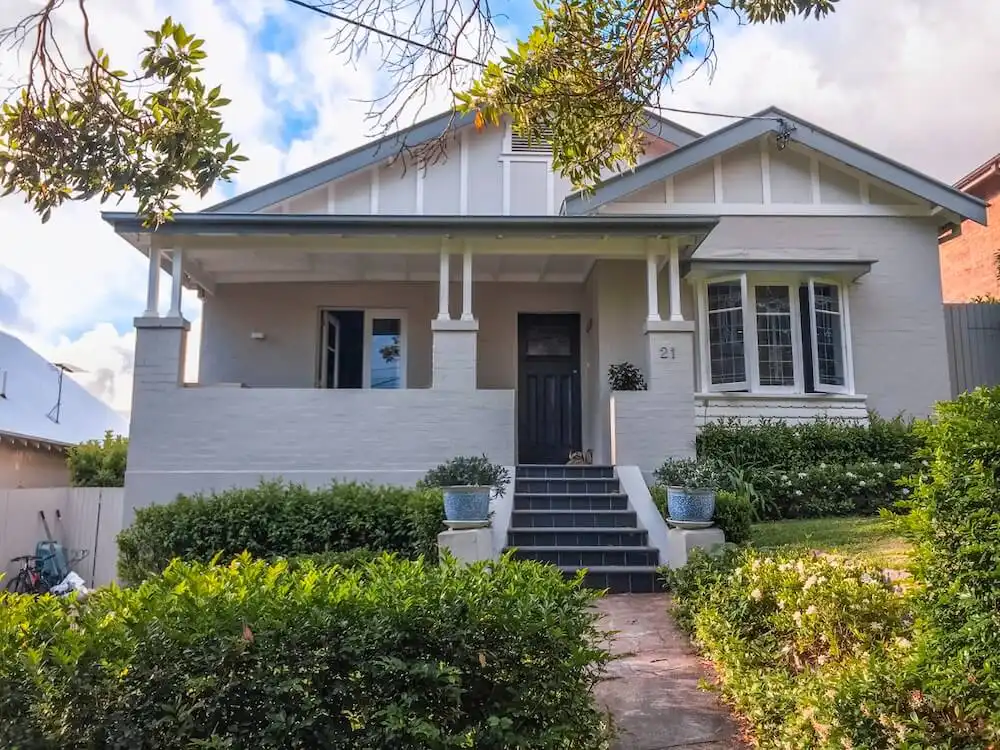
Four of the five cheapest house markets carry a Melton postcode, so our picks take three from the corridor and spread the other two across the west and the north.
Three of the five share a median of $620,000, so treat the order below as our selection rather than a ranking among them.
1. Melton, 3337
- Median Sale Price: $557,000
- Annual Growth: +16.0%
- 5-Year Growth: +33.6%
Melton has the cheapest house median in our table at $557,000, and it has also risen the fastest of the ten, up 16.0 per cent over the past year and 33.6 per cent over five years. The suburb sits in Melbourne's outer west in the City of Melton, pairing a small historic town centre with large new residential estates, so older weatherboard and brick homes near the main street sit alongside contemporary family houses further out. Melton railway station on the Ballarat line and major road links make commuting practical, and sporting clubs, neighbourhood parks and creekside open space keep a semi-rural feel. Houses there return a rental yield of 3.8 per cent.
2. Melton South, 3338
- Median Sale Price: $585,500
- Annual Growth: +9.4%
- 5-Year Growth: +36.0%
The house median in Melton South is $585,500, up 9.4 per cent over the past year and 36.0 per cent over five years, the largest five-year gain among our five picks. It is an established suburb adjoining the Melton township, where older weatherboard cottages and post-war homes mix with newer brick houses and small estate pockets, and nearby paddocks keep the edges semi-rural. The state's Level Crossing Removal Project is rebuilding Melton station and removing four nearby crossings, with the Exford Road works sitting in Melton South, and a new Melton Hospital is under construction at Cobblebank. Houses there yield 3.8 per cent, the same as in Melton.
3. Laverton, 3028
- Median Sale Price: $620,000
- Annual Growth: +5.1%
- 5-Year Growth: +7.8%
Laverton's house median is $620,000, up 5.1 per cent over the past year and 7.8 per cent over five years, the mildest five-year move in our house table. It is a practical working suburb in Melbourne's west where established residential streets meet light industrial areas and pockets of newer townhouse infill. The suburb sits close to Port Phillip Bay and nearby wetlands, giving residents foreshore reserves and shared paths, while Laverton station on the Werribee line provides a direct rail link. Housing runs to modest mid-century brick homes and more recent units. Houses yield 4.0 per cent.
4. Dallas, 3047
- Median Sale Price: $620,000
- Annual Growth: +10.7%
- 5-Year Growth: +26.5%
Dallas is our pick in the north, with a house median of $620,000, up 10.7 per cent over the past year and 26.5 per cent over five years. It is a modest, primarily residential suburb beside Broadmeadows, known for flat grid streets of single-storey post-war brick and weatherboard homes on medium-sized blocks. Neighbourhood shops, schools, small parks and sporting ovals cover everyday needs, while the larger retail and transport hub at Broadmeadows adds broader shopping and a train connection. Bus routes and major roads link it to surrounding employment areas. At 4.2 per cent, its houses carry the second-highest yield in our table.
5. Brookfield, 3338
- Median Sale Price: $620,000
- Annual Growth: +10.7%
- 5-Year Growth: +19.7%
Brookfield shares that $620,000 median and the same 10.7 per cent annual rise, with a smaller 19.7 per cent gain over five years. It is an outer-west suburb in the City of Melton on the fringe where newer estates meet open paddocks, and its streets are dominated by modern brick homes on modest blocks. Pocket parks, playgrounds and community sports ovals anchor local life, while shops, schools and broader services are in nearby Melton. The Melton Line upgrade and its level crossing removals run through the corridor, and the council has progressed local open-space upgrades. The house yield is 3.8 per cent.

A closer look at the top 5 cheapest suburbs to buy a unit in Melbourne
Melbourne's cheap apartment stock has not been a growth story. Five of the ten suburbs in our unit table are worth less than they were five years ago, and four of them fell over the past year, so buyers here are shopping in a market that has been going backwards.
That is worth knowing before you buy rather than after. Falling values are part of why these markets are the cheapest in the city, and part of what a buyer takes on with them.
1. Carlton, 3053
- Median Sale Price: $330,000
- Annual Growth: -4.7%
- 5-Year Growth: -20.7%
At $330,000, Carlton is the cheapest unit market in our table, and that price reflects a long slide: values fell 4.7 per cent over the past year and are 20.7 per cent below their level of five years ago. It is an inner-north suburb centred on Lygon Street's Italian dining strip and the leafy Carlton Gardens, home to the Royal Exhibition Building and the Melbourne Museum. Victorian terraces and low-rise apartment blocks share the streets and trams run to the city, and most homes there are rented, with students and academics a large part of the local population.
2. Travancore, 3032
- Median Sale Price: $370,000
- Annual Growth: +5.0%
- 5-Year Growth: -3.6%
Travancore's unit median of $370,000 rose 5.0 per cent over the past year, though it remains 3.6 per cent below its level of five years ago. It is a compact inner-city pocket between Flemington and Parkville with a quiet residential character, where Victorian and Edwardian cottages, interwar terraces and more recent townhouses give the streets a layered feel. Parkland and the Flemington Racecourse precinct sit close by, and trams and nearby train stations link the area to the CBD. Its units yield 7.6 per cent, the highest in our unit table.
3. Williams Landing, 3027
- Median Sale Price: $382,500
- Annual Growth: -7.8%
- 5-Year Growth: -8.5%
Williams Landing has recorded the largest 12-month fall of our five unit picks, with the median down 7.8 per cent over the past year to $382,500, leaving it 8.5 per cent below its level of five years ago. It is a modern, master-planned suburb in Melbourne's west built around its train station and a compact town centre, mixing contemporary detached homes, townhouses and apartments with pocket parks, playgrounds and landscaped wetlands along Skeleton Creek. A business park and neighbourhood shopping centre supply local jobs and services. Its units yield 6.7 per cent.
4. Melton South, 3338
- Median Sale Price: $400,000
- Annual Growth: +5.3%
- 5-Year Growth: +25.0%
Melton South stands apart in this group: its unit median of $400,000 is up 5.3 per cent over the past year and 25.0 per cent over five years, the strongest five-year gain among our unit picks. It is the same outer-western suburb that leads our house picks, and its apartments and townhouses sit close to local shopping centres, schools and sporting clubs, with Melton railway station on the Ballarat line for commuters. Units yield 4.8 per cent, the lowest of our unit picks that carry one, which is the trade-off for the growth.
5. Cairnlea, 3023
- Median Sale Price: $407,500
- Annual Growth: -2.1%
- 5-Year Growth: +1.2%
Cairnlea's unit median of $407,500 slipped 2.1 per cent over the past year and is up just 1.2 per cent over five years, so values there have essentially held flat. The suburb sits in Melbourne's west around a large lake and a network of wetlands and parks, and its streets are mainly modern low-set brick homes and clusters of townhouses with front gardens, playgrounds and shared walking and cycling paths. Local shops, sports fields, schools and community facilities cover everyday needs, and nearby stations and arterial roads carry commuters. Units yield 6.4 per cent.
Most affordable suburbs to buy within 10km of Melbourne CBD
Want to be a little closer to the action? These five suburbs are within 10km of the CBD, four of them in the inner west and one in the north east.
| Suburb | Median house price |
|---|---|
| Braybrook, 3019 | $745,000 |
| Maidstone, 3012 | $800,000 |
| Footscray, 3011 | $880,000 |
| West Footscray, 3012 | $960,000 |
| Bellfield, 3081 | $973,500 |
Our pick is Braybrook
At $745,000, Braybrook has the lowest median house price of the five, and it is also the only one of them under $750,000. Values rose 3.0 per cent over the past year and 6.9 per cent over five years, and houses yield 4.2 per cent.
It is an inner-west suburb with an established, working-class character and a diverse multicultural community. The streets are largely post-war single-front houses and low-rise units with pockets of newer townhouse infill, and everyday life centres on local parks, sports ovals and community facilities alongside small shopping strips.
Braybrook is part of the Victorian Planning Authority's Braybrook Regeneration Project, which includes a landscape master plan for new and upgraded public open space. Maribyrnong City Council has completed a major redevelopment of Skinner Reserve and endorsed a master plan for Pennell Reserve, and nearby rail works between West Footscray and Albion are rebuilding Tottenham station.
Apartments within 10km of the CBD start a good deal lower, with all five of the most affordable under $450,000.
| Suburb | Median house price |
|---|---|
| Carlton, 3053 | $330,000 |
| Travancore, 3032 | $370,000 |
| Essendon North, 3041 | $411,000 |
| West Footscray, 3012 | $425,000 |
| Melbourne, 3000 | $440,000 |
Where is this data from?
The data is collected from Domain and covers the 12 months from 1 July 2025 to 30 June 2026.
Annual growth compares that period with the 12 months to June 2025, and five-year growth compares it with the 12 months to June 2021.
A suburb is included only if it recorded at least 10 sales over the 12-month period. A small number of suburbs were excluded where the median sale price appeared to be in error.
Rental yield is the median asking rent multiplied by 52 weeks, divided by the median sale price.
Things to remember
When looking to buy a bigger block in the outer suburbs there are a few things to keep in mind. Always consider your public transport options as you don't want to burn out on a rough commute. Suburbs near a train line or well-connected with buses are ideal. Investigate all aspects of the area to ensure there is well-developed infrastructure with plenty of opportunity for jobs, entertainment and economic growth.
Frequently asked questions about the cheapest suburbs to buy in Melbourne
What is the cheapest suburb to buy a house in Melbourne?
The cheapest suburb to buy a house in Melbourne is Melton, with a median house price of $557,000 over the 12 months to June 2026.
If you narrow the search to suburbs within 10km of the CBD, the cheapest is Braybrook at $745,000.
 - https://sketch.com --%3e %3ctitle%3eicons / icon-chevron-down%3c/title%3e %3cdesc%3eCreated with Sketch.%3c/desc%3e %3cg id='icons-/-icon-chevron-down' stroke='none' stroke-width='1' fill='none' fill-rule='evenodd'%3e %3crect id='Icon-container' x='0' y='0' width='24' height='24'%3e%3c/rect%3e %3cpolygon id='Shape' fill='%2300AB55' points='12 14.3357864 5.20710678 7.54289322 3.79289322 8.95710678 12 17.1642136 20.2071068 8.95710678 18.7928932 7.54289322'%3e%3c/polygon%3e %3c/g%3e%3c/svg%3e)
Where can you buy a house under $1 million in Melbourne?
Across Melbourne as a whole, every suburb in our house table sits well under $1 million, from Melton at $557,000 to Rockbank at $634,000.
Within 10km of the CBD the budget stretches further than most buyers expect. Seven suburbs there have a median house price below $1 million: Braybrook at $745,000, Maidstone at $800,000, Footscray at $880,000, West Footscray at $960,000, Bellfield at $973,500, Coburg North at $975,000 and South Kingsville at $979,000.
Where are the cheapest apartments in Melbourne?
The five Melbourne suburbs with the cheapest apartments are Carlton, Travancore, Williams Landing, Melton South and Cairnlea.
Median prices there range from $330,000 to $407,500, which is well below the $786,718 median dwelling value for Melbourne as a whole.