I need to sell my property: where do I start?

If you've just decided to sell, start with your own numbers: roughly what your home is worth, and what you'd walk away with once the loan and costs are paid. Then line up a conveyancer and your documents, and compare at least three agents before you sign anything.
Here are the first seven steps, in order:
- Decide why and when you're selling.
- Find out roughly what your home is worth.
- Work out what you'd walk away with.
- Decide whether to buy first or sell first.
- Line up a conveyancer and your documents.
- Compare agents before you sign an agreement.
- Get your home ready.
1. Decide why and when you're selling
First, settle two things: the date you need to have sold by (a new job, a school term, a home you've already found), and whether you need the money from this sale for your next home. The first sets how quickly you need to sell. The second tells you whether buying first (step 4) is worth looking into.
If you're unsure whether now is the right time, our guide to whether to sell now or wait sets out what to weigh up.
2. How do I find out what my home is worth?
Start with what similar homes nearby have sold for. Our free OpenEstimates tool compares your home with recent nearby sales and gives an estimated value range. It's an estimate, not a formal valuation by a licensed valuer, and it can't see inside your home.
Then ask at least three agents for an appraisal (their estimate of what your home would sell for), and get each one to show you the recent sales behind their figure. As Consumer Affairs Victoria warns, don't choose an agent just because they give the highest estimate.
For what to look for in an estimate or an appraisal, see our guides to finding out what your property is worth and comparing property appraisals.
3. Work out what you'd walk away with
What you take home is the sale price, less what you owe on your home loan and the costs of selling.
Your loan. Ask your lender for a payout figure (the amount needed to close the loan, including interest and fees). It changes daily until the final figure arrives, a few days before settlement. Settlement is the day the sale completes and the buyer takes ownership.
You'll also need to send your lender a request to close the loan. Westpac, for example, asks for it a few weeks before settlement. If you owe more than the home sells for, you'll need to cover the gap before settlement.
Fees to close the loan. Your lender may charge a discharge fee: $350 at Westpac, for example, in October 2026. Your state or territory's land registry also charges a fee to register the discharge, which takes the mortgage off your property's title. In 2026-27 that's $129.20 to $248.04, depending on where you live.
If your loan is on a fixed rate, ask about a break fee too (the cost of ending a fixed rate early). Moneysmart warns it may be very high, and it's generally higher the more interest rates have fallen since you fixed.
The costs of selling. According to OpenAgent's internal data from 1 January 2025 to 1 October 2026, agent commission averages 2.01 per cent of the sale price, including GST. Published conveyancing fees are mostly about $900 to $2,200, plus searches and government fees. Then there's the marketing you agree with your agent.
In Victoria, for example, you pay agreed marketing costs even if the home doesn't sell, unless you negotiate a "no sale, no fee" deal.
Tax. You generally won't pay capital gains tax (tax on the profit from a sale) if all of these apply:
- You're an Australian resident for tax purposes
- The home has been your main residence for the whole time you've owned it
- You haven't used it to earn income, such as by renting it out or running a business from it
- It's on land of 2 hectares or less.
If any of these doesn't apply, some capital gains tax may apply. The ATO's main residence page lists the conditions.
Australian residents for tax purposes generally also need a free clearance certificate from the ATO. Without one, the buyer must hold back 15 per cent of the price (or of your share, if you own it with someone else).
Co-owners each need their own certificate, and the ATO can take up to 28 days to issue one, so apply early. You can claim any amount held back only as a credit in your tax return.

An example
Here's how the sum might look for a home that sells for $800,000, with a payout figure of $450,000 (not counting the lender's discharge fee) on a variable-rate loan. It assumes no capital gains tax is due and you have your clearance certificate. It's an example only: your price, loan and fees will differ.
| Item | Amount |
|---|---|
| Sale price | $800,000 |
| Less the loan payout | $450,000 |
| Less commission at 2.01% | $16,080 |
| Less conveyancing (published fees, before searches) | $900 to $2,200 |
| Less the lender's discharge fee (Westpac) | $350 |
| Less registering the discharge | $129.20 to $248.04 |
| What you'd walk away with (before marketing, searches and other fees) | about $331,100 to $332,500 |
Marketing isn't included because it varies so much. Ask each agent for a written marketing quote and take it off this figure. The figure also leaves out searches, other government fees, any electronic settlement fee and the usual settlement adjustments, such as council rates split between you and the buyer.
Our guide to the cost of selling a house breaks down each cost by state.
4. Should I buy first or sell first?
Selling first means you know how much you'll have to spend, but you may need to rent or move twice. Buying first means you can secure your next home before you sell, but you may carry two loans for a while.
Some lenders offer a bridging loan, a short-term loan that lets you buy your next home before your current one sells. Westpac's, for example, is for owner-occupiers and runs for up to 12 months. The interest is added to the loan, and the rate rises by 1 percentage point after the first three months.
If buying first appeals, ask your lender early what a bridging loan would cost you in interest and fees. Our guide to the benefits of buying before you sell makes the case for buying first.
5. Line up a conveyancer and your documents
A conveyancer or solicitor (in WA, often a settlement agent) can prepare the contract and the documents your state requires, and look after settlement. In some states those documents must be ready before you advertise, so it's worth bringing one in before your home goes on the market.
| State | What must be ready | When |
|---|---|---|
| NSW | Contract of sale | Before you advertise |
| Vic | Vendor's statement (section 32), and a due diligence checklist | Statement: before the buyer signs. Checklist: from when the home is offered for sale (your agent's job if you use one) |
| Qld | Seller disclosure statement (Form 2) and any certificates that apply. For a home with a pool, these include a pool safety certificate, or a notice that there isn't one | Before the buyer signs. Auctions have their own timing rules |
| SA | Vendor's statement (Form 1) | Private sale: at least 10 clear days before settlement, and the buyer's cooling-off period only starts once they have it. Auction: available 3 business days before |
| WA | For a strata-titled home, the information in the pre-contractual disclosure statement from Landgate, WA's titles office. Otherwise, no vendor's statement | Before the buyer signs |
| Tas | None required under Tasmania's Property Agents and Land Transactions Act 2016. The standard contract includes optional disclosure | No set time |
| ACT | The documents the law requires. Building and pest reports, where they apply, must come from an inspection no more than 3 months before the home is first advertised | Available whenever buyers can make an offer |
| NT | The standard contract includes a building status report (it shows any building work that doesn't comply with the Building Act) unless the contract excludes it | With the contract |
Our guide to the legal steps to selling a house goes into more detail.
6. Compare agents before you sign an agreement
The agents who appraised your home in step 2 are your starting shortlist. Talk to at least three, as NSW Fair Trading suggests, and get each one's fees, commission and marketing plan in writing. Compare their recent sales near you, not just their appraisal.
An agency agreement (the contract that appoints an agent) sets how long the agent has to sell, what you'll pay and how you can end it. Before you sign, check:
- How long it runs.
- Queensland caps a sole or exclusive agreement (where one agent has the right to sell your home) at 90 days.
- Tasmania caps most agreements at 120 days.
- In SA, agreements run up to 90 days and can be extended once if the agent sends a notice of expiry and you don't say no.
- Elsewhere, you agree the term with the agent.
- How you can end it.
- In Queensland, a sole or exclusive agreement of 60 days or more can be ended with 30 days' written notice, but it can't end before day 60 unless you both agree in writing.
- In Tasmania, either side can end any agreement with no more than 30 days' written notice.
- In NSW and the ACT, if the fixed term is longer than 90 days, you can end it with 30 days' written notice once the first 90 days are up.
- In Victoria and the NT, you usually can't end it early unless the agent agrees.
- Whether you can change your mind. In NSW, there's a cooling-off period: you can change your mind until 5pm the next day, not counting Sundays or public holidays. Victoria has no cooling-off period for agency agreements.
- What happens if you switch. If you sign with a new agent before the first agreement has properly ended, you could pay two commissions.
For each type, and how to end one in your state, see our guide to the best way to structure an agent agreement.
Selling your home yourself is also an option, and the document rules above apply either way. Our guide to selling your house privately explains how it works.
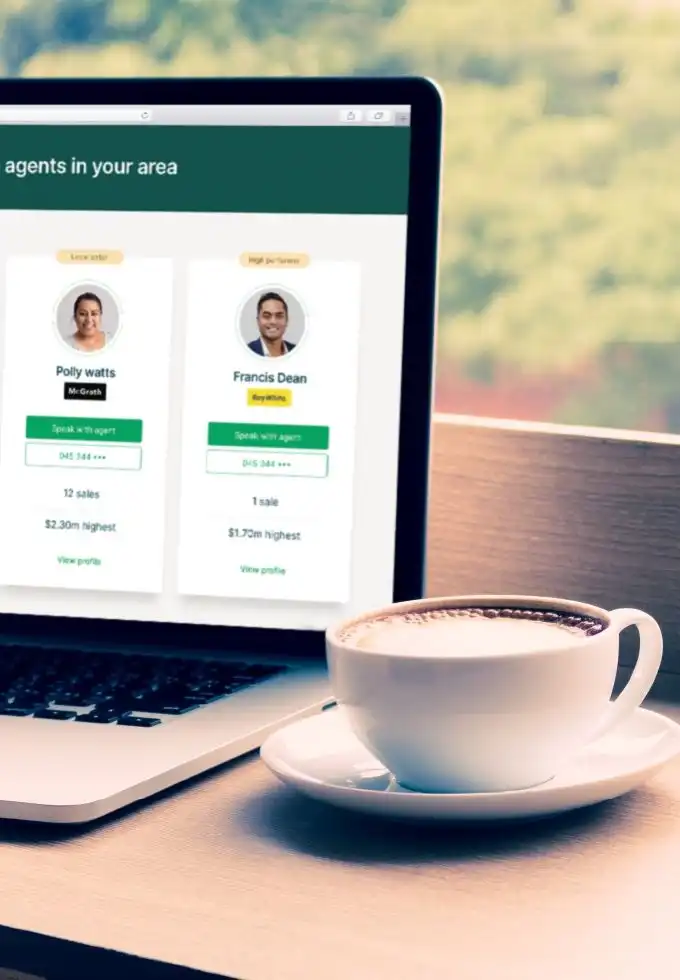
OpenAgent is free for sellers. You can compare agents in your area to build your shortlist of recommended agents.
7. Get your home ready
Before you spend on optional repairs or renovations, it's worth asking the agents appraising your home which ones buyers in your area pay more for. Our guide to what not to fix when selling a house shows which jobs to skip.
What comes next?
Once you've chosen an agent, the work turns to pricing, marketing, open homes, negotiating and settlement. Our step-by-step guide to selling a property covers the whole process, and our guide to how long it takes to sell a house shows what to expect.
For costs, tools and more guides on selling, start at our selling hub.